Emergent Dynamics Modeling Platform

What emerges?

Fifty years of complexity science — from Schelling to Barabasi — described how order arises from interaction. EDMP compiles those theories into executable emergence models on top of SGDP and CAMP.

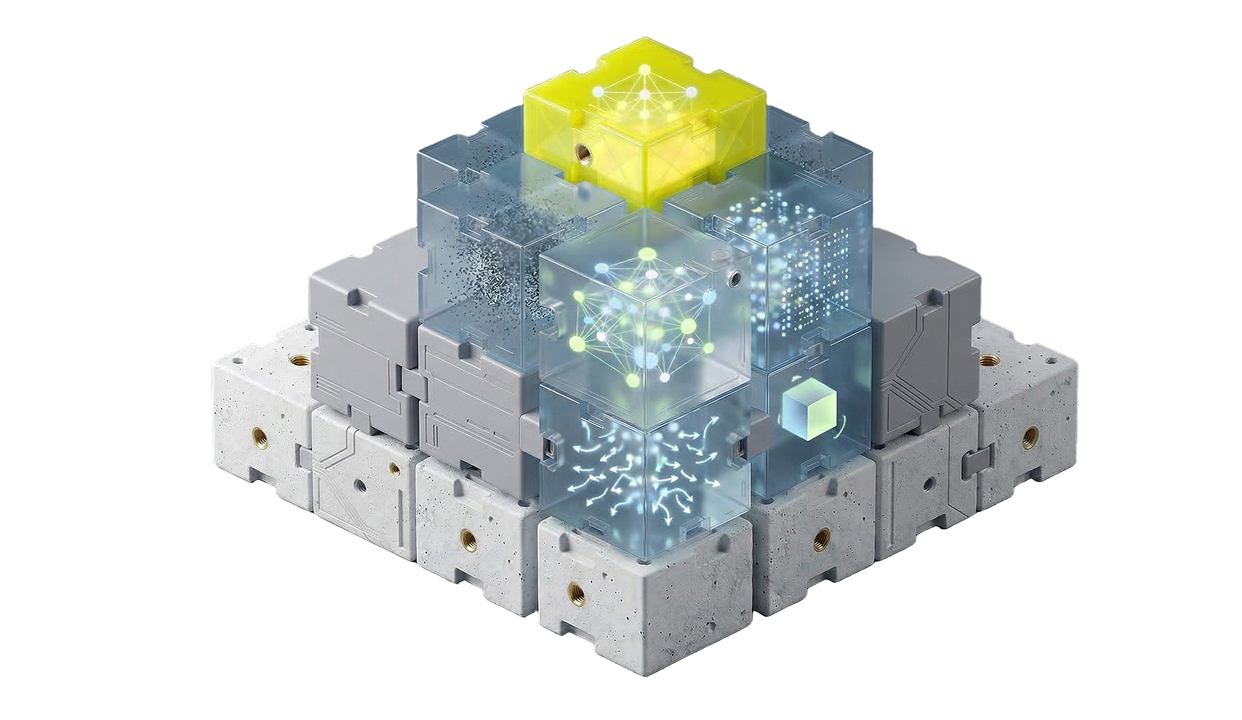
EDMP platform visualization
The Problem

Emergence was never meant to stay in the sandbox

Epistemological

Complexity science simulates. It does not compile

Fifty years of complexity theory modeled emergence with abstract agents: dots on grids, nodes with rules, particles without identity. The models produce interesting patterns, but agents have no social structure and no cognition. Emergence in a vacuum.


Methodological

Three sciences. Three silos. No compiler connects them

Sociological populations exist in one computational universe. Cognitive models exist in another. Emergence models exist in a third. You can model who people are. You can model how they think. But what happens when thinking people in social structures interact at scale?

Applied

Most emergence models skip minds and societies

Viral predictions without cognitive thresholds. Market models without social structure. Urban simulations without habitus. EDMP starts where others stop: agents already carry sociology and cognition before emergence is computed.

The Approach

From simulating abstractions to compiling emergence

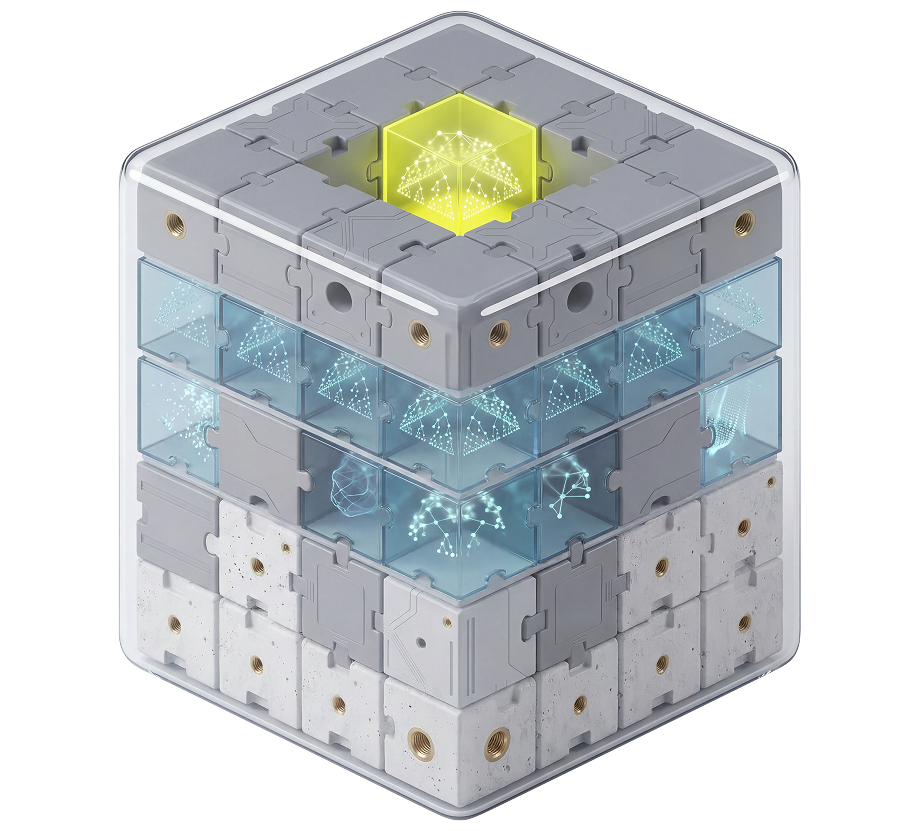
EDMP is the capstone layer: SGDP defines who agents are, CAMP defines how they think, EDMP computes what emerges when they interact.

Old Paradigm

Abstract agents (dots, nodes, rules)

Emergence from uniform populations

Validate by visual inspection

Simulation as exploration

New Paradigm

→ Agents with sociology (SGDP) and cognition (CAMP)

→ Emergence from heterogeneous, theory-grounded populations

→ Validate by reconstructive tests against empirical benchmarks

→ Simulation as prediction: executable, auditable, defensible

Not a grid of abstract dots. Agents carry social position and cognition before emergence is computed.

Theoretical Foundation

Nine theorists. Fifty years. Compiled.

Every EDMP service is derived from formal complexity theory.

Reproduce S-curve adoption dynamics from first principles

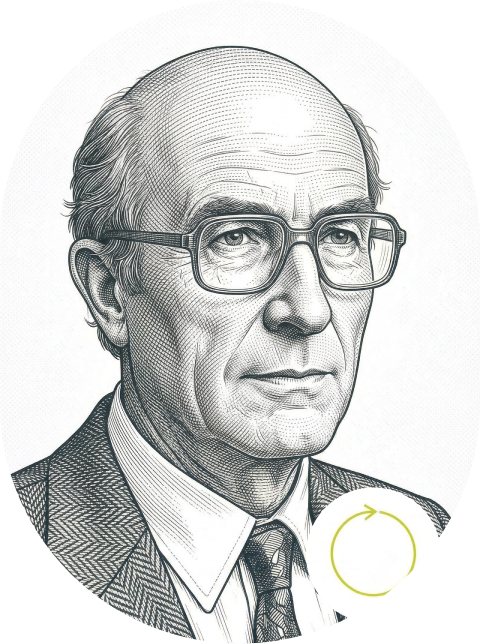
Everett Rogers

Everett Rogers

Adoption engine with innovators, early adopters, majority, and laggards using transition dynamics.

Diffusion of innovations

Model local vs global optima and lock-in

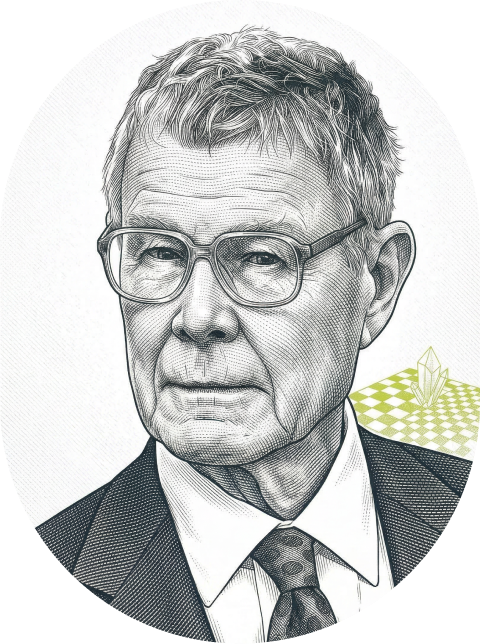
Stuart Kauffman

Stuart Kauffman

Fitness landscape specification with tunable ruggedness for adaptive strategy search.

Fitness landscapesNK model

Predict segregation and tipping from micro-thresholds

Thomas Schelling

Thomas Schelling

Agent tolerance thresholds trigger local movement and macro-pattern shifts.

Threshold modelSegregation

Simulate when cooperation emerges and collapses

Robert Axelrod

Robert Axelrod

Iterated game interactions with memory, reputation, and evolving strategies.

Evolution of cooperation

Model fragility and cascade failures in networks

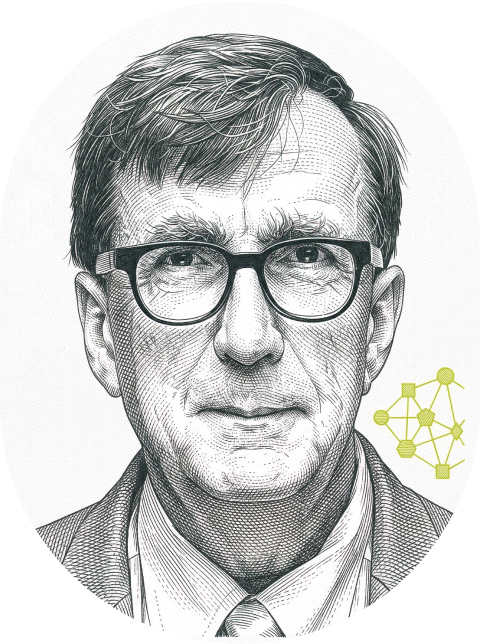
Albert Barabasi

Albert Barabasi

Network growth and hub formation via preferential attachment with failure propagation.

Scale-free networksCascade failure

Predict spread speed through realistic topology

Duncan Watts

Duncan Watts

Small-world structures balancing high clustering with short global paths.

Small networksGlobal cascades

Simulate subsystem resilience and differentiation

Niklas Luhmann

Niklas Luhmann

Autopoietic subsystem logic with coded communication and boundary maintenance.

AutopoiesisSocial systems

Model sociotechnical systems with human and non-human actants

Bruno Latour

Bruno Latour

Actor-network style interactions where technologies and institutions co-produce outcomes.

Actor-Network Theory

Compute system-level equilibrium under stress

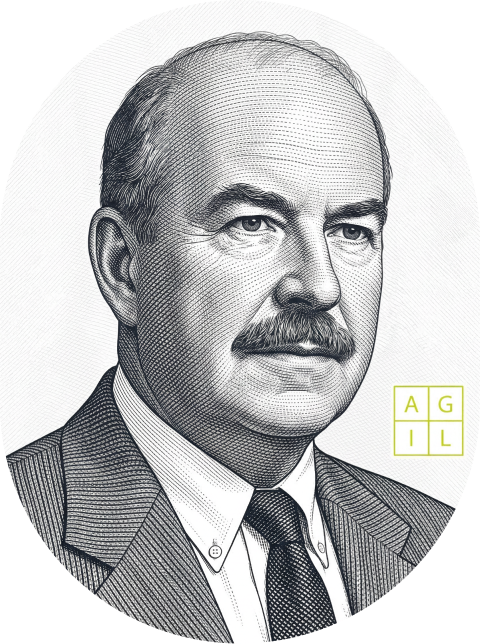
Talcott Parsons

Talcott Parsons

AGIL-style system balancing and perturbation response dynamics.

AGIL schemaSystem equilibrium
Platform Services

What this platform provides

9 services. Each rooted in theory. Products consume these services in combinations.

Cascade Engine

Cascade Engine

Models when behaviors spread through populations based on threshold dynamics.

Diffusion Modeler

Diffusion Modeler

Computes adoption curves for ideas, behaviors, and products on computed populations.

Pattern Detector

Pattern Detector

Identifies stable emergent patterns in multi-agent interaction streams.

Phase Transition Analyzer

Phase Transition Analyzer

Detects tipping points where the system moves to a new stable state.

Game-Theoretic Interaction Engine

Game-Theoretic Interaction Engine

Runs strategic interactions with heterogeneous agents and adaptive policies.

Systemic Equilibrium Analyzer

Systemic Equilibrium Analyzer

Models system-level stability and the conditions under which equilibrium shifts.

Network Dynamics Engine

Network Dynamics Engine

Simulates network topology evolution as agents form and break ties.

Autopoietic Subsystem Modeler

Autopoietic Subsystem Modeler

Models self-reproducing social subsystems and boundary maintenance.

Sociotechnical Actant Interface

Sociotechnical Actant Interface

Models how non-human actants participate in social and platform dynamics.

Validation

How we know it works

Five levels of validation, applied specifically to this platform.

EDMP validation layers diagram
L5

Reconstructive Validation

Reproduce known emergent phenomena from empirical data

L4

Mechanistic Grounding

Each service tied to formal theory and causal chain specification

L3

Behavioral Plausibility

Complexity experts recognize emergent patterns as realistic

L2

Structural Validity

Dynamic invariants preserved across simulation runs

L1

Statistical Fidelity

Monte Carlo outcome distributions align with known benchmarks

Benchmark set includes diffusion curves, cascade tipping points, network fragility, and cooperation equilibria.

EDMP is in concept phase. The methodology is specified first so implementation quality can be audited against explicit standards.

Built on this platform

Products built here

EDMP powers products that need to model large-scale interaction outcomes.

Prolepsis
See the reaction before the launch

See the reaction before the launch

Creative impact prediction. Test messaging, campaigns, and concepts on computed audiences before spend.

SaaS prolepsis.app
Q Hero
Observation Creates Reality

Observation Creates Reality

Universe in your pocket powered by all three Quantumeon platforms: sociology, cognition, and emergence.

mobile app qhero.app
Viral Scope
When does content ignite — and when does it backfire?

When does content ignite — and when does it backfire?

Viral potential forecasting via cascade modeling on agents with cognition and social structure.

B2B Enterprise by request
Policy Cascade
How legislation cascades through social layers

How legislation cascades through social layers

Model compliance, circumvention, and protest dynamics before policy launch.

B2B Enterprise by request
Movement Lab
When does discontent become collective action?

When does discontent become collective action?

Simulate movement emergence from thresholds, networks, and information cascades.

B2B Enterprise by request
Platform Ecosystem
Users, algorithms, moderators — what emerges?

Users, algorithms, moderators — what emerges?

Platform ecosystem modeling where humans and machine actants co-produce dynamics.

B2B Enterprise by request